

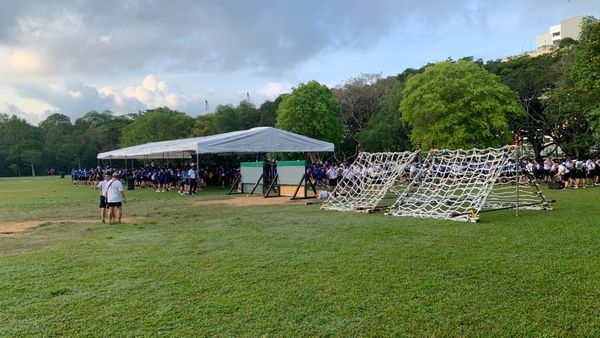
BB Blaze is an annual signature event organised by the Boys’ Brigade in Singapore, held almost every year since 2002 for secondary school boys.
BB Blaze 2026 brought together 123 teams, with 523 Boys and 55 Open Category participants, for a 16.9 km multi-activity adventure race across Eastern Singapore, with much of this year’s race taking place in and around Pasir Ris Park.
Along the route, teams took on stations including structure building, obstacle course elements, first aid, kayaking at Bedok Reservoir, archery, and micro-navigation.
Running an event at this scale is not just about the stations. It also depends on knowing where teams are and how the race is progressing, so decisions can be made at the right time.
This year, Mangostin was used as the live event tracking system for the race, and worked with SportIdent checkpoint hardware (commonly used in orienteering events) at the micro-navigation station.
How team progress was tracked
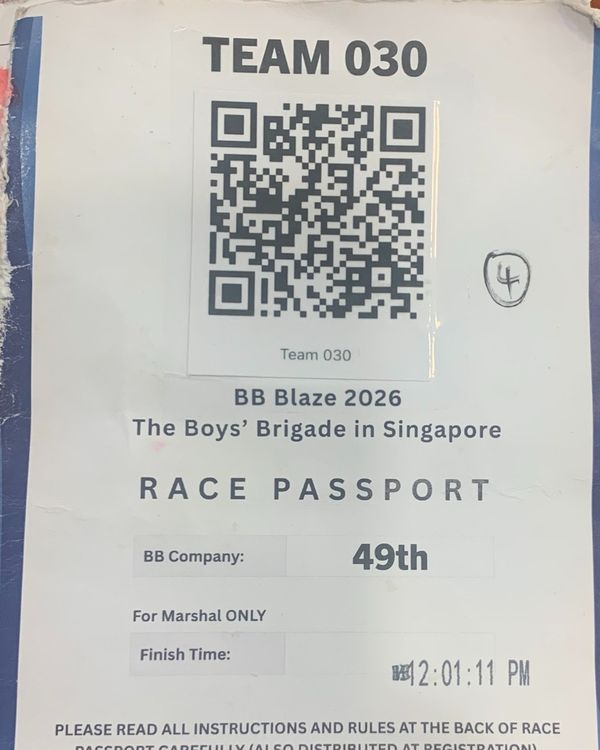
Each team was assigned a unique QR code. Along the race route, marshals used the Mangostin web app on their own phones to scan QR codes and record team progress.
Some scans acted as route checkpoints. At activity stations, both check-in and check-out scans were recorded.
To support fair play, each marshal could only check teams in or out at their assigned station. This helped keep station records consistent and reduced the chance of incorrect or disputed entries.
Each scan appeared live in the Ops Room, giving organisers a clear view of where teams were, which stations they had reached, and whether they had completed each activity.
Instead of relying mainly on manual updates, the Ops Room could follow the race as it unfolded in real time.
From the Ops Room
With over 100 teams spread across the course, the Ops Room needed a reliable way to keep track of the race. Mangostin brought team progress into one view, helping the team respond earlier and coordinate more effectively.
This helped the organising team:
- decide when to close or extend checkpoints
- identify and manage bottlenecks
- redeploy buses, marshals, and medical support
- flag teams that were delayed or unaccounted for
Previously, much of this relied on manual coordination. A shared view reduced the need for constant radio or phone updates, and helped the team act earlier when issues emerged.
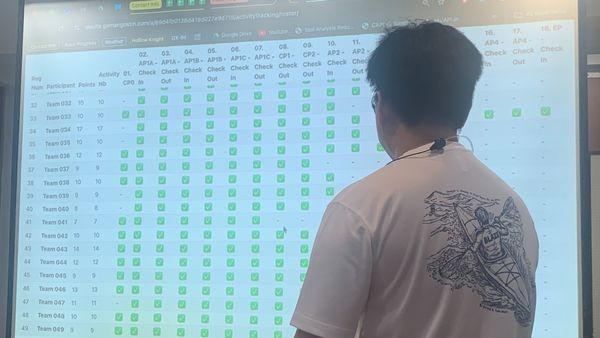
“The live team completion tracker allowed the Ops Room to monitor each team’s progress in real time. This helped us make timely decisions, from managing bottlenecks to redeploying resources. Previously, much of this was done manually. Using Mangostin gave us much better visibility and coordination during the event.”
Operations IC, BB Blaze 2026
At the micro-navigation station
The micro-navigation station has traditionally been one of the most challenging parts of BB Blaze to manage.
In previous runs:
- teams experienced long waiting times
- checking valid punch sequences required manual verification
- human errors were more likely under time pressure
- significant manpower was needed to manage flow and validation
This made it one of the most resource-intensive stations to run.
At the micro-navigation station, each team had to locate the correct sequence of four checkpoints using distances and bearings provided. Each team carried a SportIdent key, which they used to “punch” the checkpoint devices. At the end of the station, Mangostin read the key, checked the sequence automatically, and showed the result immediately.
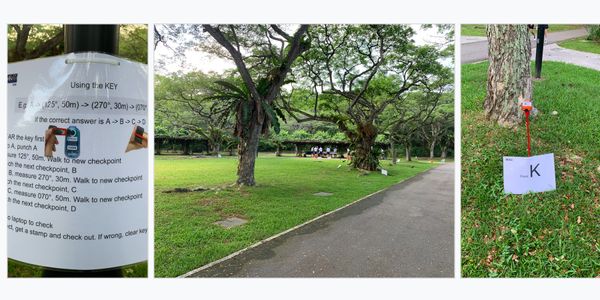
This changed how the station was run.
Queues moved faster, with less manual checking. Teams were able to clear the station within a tighter time window. Manpower could focus more on safety and guiding participants, rather than verifying results.
In practice, all teams were able to attempt and clear the station within about 1.5 hours. In previous years, even with around two hours allocated, many teams were not able to complete the station.
A practical fit for schools and outdoor learning
The setup was straightforward to deploy and ran reliably throughout.
For schools planning outdoor learning journeys, navigation activities, or multi-station assessments, having a simple way to track progress across groups reduces coordination overhead and improves visibility during the activity.
It allows teachers and organisers to spend less time tracking, and more time supporting participants and keeping the activity safe.
Key image photo courtesy of Boys’ Brigade Singapore.